
Former US President Donald Trump claimed victory over Iran, stating they agreed to never have a nuclear weapon and provided a 'significant prize' related to the Strait of Hormuz. He also suggested a change in Iranian leadership and acknowledged Pakistan's role in facilitating talks.

The United States, which entered this war in expectation of a short, sharp win along the Venezuela model, is now preparing for deeper involvement in a conflict it does not fully control, without the allies it typically relies on, against an adversary that is not behaving as expected, in a global environment that is already absorbing economic shock. Prem Panicker continues his must read daily blog on the Gulf War.

Egypt, Pakistan, Saudi Arabia and Turkey met in Islamabad in what analysts say is the formal opening of a new diplomatic formation that could reshape the post-war regional order. Their immediate goal is a ceasefire; their larger ambition is to ensure that neither Iran nor Israel emerges from this war in a dominant position. Pakistan's foreign minister then flew directly to Beijing and mooted a Chinese role as guarantor of any eventual agreement. Prem Panicker continues his must read daily blog on the Gulf War.
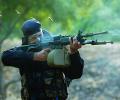
'The era of conventional wars is almost over in the Indian context.' 'In such a scenario, special forces could play a decisive strategic role in the spectrum of conflict.'

The delegations from the US and Iran head to Islamabad on Friday, carrying a ceasefire that is already fraying, a Strait that is technically open and practically closed, and a negotiating agenda that would challenge even parties actually negotiating in good faith, which these groups are not. Prem Panicker continues his must read blog on the Iran War.

The core issues to be settled -- access to Hormuz, Israel's aggression in Lebanon, the question of Iran's nuclear programme, sanctions relief and compensation -- are thorny enough to require weeks of patient negotiation. The most likely outcome of the opening sessions is that both sides take the measure of each other, establish what is and is not negotiable, and return home without having broken anything. That would count as progress.

The question is whether the clocks allow enough time for two deeply mistrustful sides to get there, and whether the surface calm holds long enough for the paddling to produce something before the ceasefire ends on April 22, notes Prem Panicker in his must read blog on the Iran War.

The LPG squeeze on India's restaurant sector is the quotidian face of a deeper crisis.

The purge in Washington does not pause the war. Strikes continue, Hormuz remains closed, and Brent crude is still dancing around $109 a barrel. For India, the command chaos in the Pentagon is another layer of uncertainty piled on five weeks of conflict that was already straining every buffer Delhi has.

'The next two to three weeks will not be decided in Washington.' 'They will be decided in Tehran, in whatever calculation Iran makes about the costs of continued resistance against the costs of appearing to have yielded.'

British Prime Minister Keir Starmer has called for a negotiated settlement with Iran and deployed additional fighter jets to West Asia to strengthen the UK's defensive operations.

The pause gives the US time to breathe, to regroup, to move its expeditionary force into position without risk of interception along the way. It gives Iran nothing -- on the ground, attacks against its infrastructure continue apace. Prem Panicker in his must read daily blog on the Gulf War.

This weekend, Donald Trump has begun to say the quiet part out loud -- that he wants to take control of Iran's oil, a formulation more in line with his robber-baron style of international relations.

Baghaei also alleged that recent unrest in Iran was fuelled by foreign interference, claiming riots were triggered by "very evident" interventionist remarks by US and Israeli officials.

'Was the five-day pause ever meant to hold, or was it simply another instrument of signaling, of positioning, of buying time in a war where even the pauses are tactical?' asks Prem Panicker in his must read daily blog on the Gulf War.
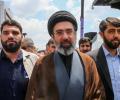
'Mojtaba Khamenei supervised the most recent repression in December 2025 and January 2026 which remains ongoing.'

Iran is fighting a different war: Older, slower, and in some ways more dangerous. Iran doesn't need to shoot down an F/A-18. It only needs to make the Strait of Hormuz feel dangerous long enough for insurance markets, shipping companies, and oil futures traders to do the rest. Prem Panicker continues his must-read daily blog on the war in the Middle East.

The question is no longer whether the war will expand. It has. The next few days will tell us whether the war stabilises around Hormuz or whether the Strait itself becomes the trigger for a far larger rupture. What to watch for over the next 48 hours is simple: Any move by the US toward direct naval control of the Strait; any credible Iranian attempt to disrupt or mine shipping lanes and, critically, whether energy infrastructure in the Gulf continues to be targeted.If those lines are crossed in tandem, the war will no longer be containable within the region.

Former Wimbledon champion Marketa Vondrousova withdrew from the Australian Open on Sunday after the Czech player said she was dealing with a shoulder injury.

When everyone has footage and no one can verify it, the loudest voice wins, notes Prem Panicker who begins a daily blog on the War in the Middle East.

More than 70 United States' military advisers, mostly special forces personnel, are secretly working in Pakistan to help its armed forces battle the Al-Qaeda and the Taliban in the country's lawless tribal areas.

For weeks, the war skirted the edge of catastrophe without tipping over. Missiles flew, there was much destruction, commanders were assassinated, cities across the Gulf and even in Israel struggled to absorb the shock. But one line held: Energy infrastructure, the arteries of the global economy, remained largely untouched. That is no longer true. Prem Panicker continues his must read daily blog on the Gulf War.

Israel has for more than two decades and several US presidencies worked to draw the United States into a full-scale war with Iran. Having finally achieved that, the last thing it wants is Trump declaring victory and going home, as he is prone to do. Ali Larijani was the figure most capable of handing Trump a negotiated exit with something to show for it. Without Larijani, the road to an exit gets considerably narrower. Prem Panicker continues his must read daily blog on the Gulf War.

When missiles fly in this region, they are never just aimed at military targets.

Following the seizure, Moscow issued a strong condemnation asserting that no country has the right to use force against vessels lawfully registered under another state's jurisdiction, particularly on the high seas.

Israel and the United States had a plan. Iran punched back. And now the Gulf is reeling, the world is beginning to feel the pain and, as on date, no one in Washington or Tel Aviv appears willing to admit that the punch has landed, notes Prem Panicker, continuing his must-read blog on the war in the Middle East.

US President Barack Obama has decided to send 300 additional American Special Operations troops to assist in Iraq's fight against the advancing Sunni, Al Qaeda-inspired extremist group Islamic State of Iraq and Syria, which has captured several cities and has its sights set on Baghdad.

Prime Minister Narendra Modi stayed calm, avoided public confrontation, and focused on India's long-term interests to steady ties with the United States.

The United States carried out a covert drone strike on a port facility along Venezuela's coastline earlier this month, in what is believed to be the first known American attack on a target inside Venezuelan territory, CNN reported.

'There is a lot of euphoria in the country after a trade agreement is signed. But it is an illusion for us. What is more important is making it real.'

From the USA to UAE, Canada to Italy, Indian-origin cricketers will represent associate nations at the T20 World Cup. Meet the Desis chasing global glory at a home away from home.

That a country thinks it has the right to randomly invade another country has repercussions that will for sure be played on the global arena in the years to come.

The White House on Thursday stated that United States President Donald Trump is 'extremely frustrated' with both Russia and Ukraine over the slow progress toward ending the ongoing war and is unwilling to engage in 'meetings just for the sake of meeting'.

World champion D Gukesh and compatriot Arjun Erigaisi delivered in a must-win situation to help PBG Alaskan Knights register their first win in the Global Chess League (GCL) in Mumbai on Thursday.

'Non-compatible with Western Civilization' is about as vague and jingoistic as it gets and Trump saying this gives full license to his acolytes to go full throttle on making life as difficult and scary as possible for as many non-white people as possible,' notes Sree Sreenivasan.
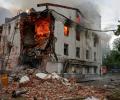
Ukrainian President Volodymyr Zelenskyy on Sunday said that a "dignified end" to the war was possible given that the US was demonstrating a constructive approach.

After the United States intercepted Al Qaeda's most serious threat in recent years to target its embassies, country's Special Forces have been put on high alert to hit potential targets of the outfit in the Middle East, a media report has said.

In a culture where children take up the profession of their father, her becoming a politician was seen as natural and acceptable.
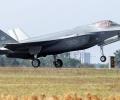
We need to equip the Indian Armed Forces, not 'commercial' as Trump wants, but 'operationally' looking at growing Chinese military capabilities, asserts Lieutenant General Prakash Katoch (retd).
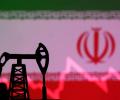
The Trump administration has sanctioned entities and individuals from India involved in sales of Iran's petroleum and petroleum products, saying the funds from this trade support Tehran's regional terrorist proxies and procure weapons systems that are a direct threat to the US.
 © 2026 Rediff.com - Advertise with us - Disclaimer - Privacy Policy - Sitemap - Feedback - About us - Terms of use - Grievances